Florence Gardens in Spring: Cultural Immersion in Bloom
Springtime in Florence – Gardens & Language Learning
Spring in Florence – la primavera fiorentina – is a time of rebirth for both nature and cultural life. As temperatures mellow and days grow longer, the city’s gardens burst open with color and profumo di fiori (fragrance of flowers). This is the perfect season for a relaxing walk, or as Italians would say, una passeggiata, through historic green spaces. It’s also an opportunity to practice Italian in real settings. Whether you’re greeting a gardener with a cheerful “Buongiorno!” or deciphering Italian plant names on informational plaques, each garden visit becomes a mini Italian lesson. Below, we highlight Florence’s most beloved spring-accessible gardens – and how visiting them can naturally enhance your Italian language immersion.
Boboli Gardens (Giardino di Boboli)
Boboli Gardens, the 16th-century Medici park behind Palazzo Pitti, is open year-round but especially inviting in spring when its hedges and lawns turn lush green. Laid out in classic giardino all’italiana (Italian-style garden), it features grand avenues, statues, secluded grottos and refreshing fountains among its hillside terraces. As you wander under blooming trees toward panoramic viewpoints, you’ll likely hear Italian around you. Spring draws both tourists and Florentines of all ages – families on strolls, students on school outings, art lovers – all enjoying this “open-air museum” of a garden.
Visiting Boboli offers many chances to practice Italian. At the ticket booth you might try a polite request – “Un biglietto, per favore” (One ticket, please) – as admission is required. As you explore, you can greet a passerby with “Buona giornata!” (Have a nice day!) or remark to a friend “Che bella fontana!” (What a beautiful fountain!) by the Neptune statue. Even reading simple signs like uscita (exit) reinforces vocabulary learned in class. In short, fare una passeggiata (taking a stroll) through Boboli isn’t just scenic – it’s a chance to live the language. Find a quiet bench on the grass to jot down any new words you encounter, and enjoy Florence’s Renaissance beauty as your bilingual backdrop.
Bardini Garden (Giardino Bardini)
For a more tranquil spring stroll, head to Bardini Garden on the Oltrarno hill. This historic garden is famed for its pergola di glicine – a long wisteria trellis that explodes in very fragrant purple blooms each mid-April. Even outside the brief wisteria season, Bardini is full of flowers (azaleas, camellias, roses) and offers one of Florence’s most stunning panoramic views from its terraces. It’s quieter than Boboli, giving you space to practice Italian in peace as you wander past baroque staircases and fountains.
At Bardini’s overlook, many visitors can’t help but exclaim “Che vista stupenda!” (What a stupendous view!). It’s an ideal spot to pull out your Italian notebook or review vocabulary with a classmate while gazing over the city’s domes and towers. If the small café is open, you could even order in Italian – perhaps “Un cappuccino, per favore” – and sip it in the garden, indulging in la dolce vita while reinforcing what you’ve learned. In Giardino Bardini, cultural immersion comes naturally.
Iris Garden (Giardino dell’Iris)
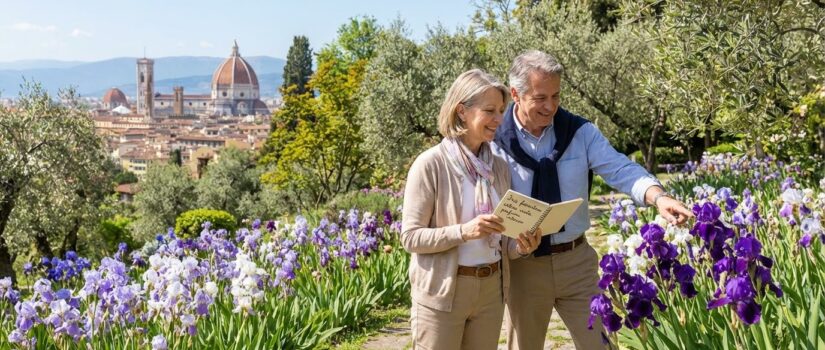
A true spring treasure of Florence, the Iris Garden opens its gates for only a few weeks each year – typically late April through mid-May – when thousands of irises are in spectacular bloom. Nestled on the slope just below Piazzale Michelangelo, this garden celebrates the giaggiolo (iris), symbol of Florence, with over 1,500 varieties from around the world. Entry is free, and if you’re visiting during its brief season, it’s a must-see burst of color and perfume.
Strolling the dirt paths between vibrant iris beds, you’ll enjoy postcard views of Florence’s skyline beyond the flowers. It’s easy to strike up friendly chat here – many visitors are locals or gardening enthusiasts, happy to share an “Che meraviglia!” (How marvelous!) as they admire a rare bloom. Simply listening to the Italian chatter around you can teach you new expressions of wonder. Because the Giardino dell’Iris is open so briefly (and closes on rainy days for safety), seize the moment if you’re in town at the right time. Bring a notebook – you might jot down a few Italian phrases or even a short poem while sitting on a bench among the blossoms. This garden’s fleeting beauty encapsulates the Italian idea of cogli l’attimo – seize the moment – both in appreciating nature and in practicing the language when the opportunity arises.
Rose Garden (Giardino delle Rose)
Open daily until sunset (free entry), the Rose Garden on the slope below Piazzale Michelangelo truly shines in spring. In May, hundreds of roses burst into bloom, filling the air with sweet perfume. The terraces provide a postcard-perfect panorama of Florence’s skyline. It’s no wonder that on sunny days people relax on benches or lounge on the grass with picnic baskets. Join them for a picnic all’italiana – bring some snacks and wine, and you’ll blend right in with locals enjoying la bella stagione.
You might even witness a local tradition: on Pasquetta (Easter Monday), the Rose Garden fills with families on picnic blankets – a beloved custom during Easter in Florence. Amid the laughter and clinking glasses, you could hear a joyful “Cin cin!” (cheers!) as friends toast the springtime. Hidden among the flowers are whimsical bronze sculptures by artist Folon, which often spark conversation as visitors comment on them in Italian. With no ticket needed here, you’re free to wander and practice Italian at your own pace. Even a simple compliment to a fellow visitor – “Che rose splendide!” (What gorgeous roses!) – may lead to a friendly exchange. Amid this relaxed setting, you’ll absorb Italian language and life in a natural, joyful way.
Bringing Language to Life in the Garden
Each of these gardens is more than just a pretty backdrop – they are living classrooms where Italian language and culture flourish. The simple acts of buying a ticket, greeting the gardener with a friendly “Ciao!”, eavesdropping on local chatter, or reading an Italian sign can turn sightseeing into interactive learning. This kind of real-world practice truly reinforces your lessons from class and builds confidence in speaking. For example, after a morning exploring Boboli or Bardini, you could unwind in one of the best cafés in Florence for studying Italian to jot down new vocabulary over un cappuccino. Such small rituals turn an ordinary coffee break into an informal language lesson.
To deepen your experience, balance garden time with formal study. Enrolling in an Italian language school in Florence can accelerate what you learn outside. After morning classes, an afternoon wandering Florence’s gardens is truly the perfect mix of studio e svago (study and leisure). In no time you’ll find yourself exclaiming “Bellissima!” at a view without even realizing it.
As an Italian proverb says, “Aprile, dolce dormire” – April brings sweet sleep. In Florence’s spring gardens, it’s really easy to feel that relaxed joy all around. Buona primavera e buona scoperta – happy spring and happy discovery!