Embracing the Italian Spring: Idioms and Expressions for the Season
Italians have a saying for every season, and spring in Florence is no exception. In this linguistic cultural piece, readers will discover charming Italian idioms and expressions inspired by spring’s arrival. From proverbs about March’s unpredictable weather (“Marzo pazzerello”) to the sunny optimism behind “Aprile dolce dormire” (“April, sweet sleep”), each phrase reveals how locals view the blossoming world around them. The article explains the meaning and origins of these seasonal sayings and how they’re used in everyday Florentine conversation. It’s an engaging way for travelers to expand their Italian vocabulary while gaining insight into the cheerful mindset that springtime brings to Florence’s residents.
Springtime in Italy – A Season of Change and Renewal
Italy in spring is a time of dramatic change. Days grow longer and warmer, fields turn green, and city life moves outdoors. Strolling through Florence in April, you might see locals chatting about the weather, the upcoming Easter holidays, or weekend plans in the countryside. And they won’t just talk plainly – they’ll pepper their conversation with vivid idioms that capture the mood of the season. Learning these expressions is more than just picking up vocabulary; it’s about seeing how Italians view spring, with all its quirks and joys, through the lens of language.
(Just as we saw with autumn idioms in a previous article, each season in Italy inspires its own sayings. Now that winter’s chill is fading, let’s embrace the Italian spring by discovering seven delightful idioms that will make your Italian sound as natural as a Tuscan in April.)
Marzo pazzerello – “Crazy March”
Literally: “Crazy March, look at the sun and take the umbrella.”
Meaning: March weather is unpredictable – you can’t trust a sunny sky not to turn into rain in a moment.
In Italy, Marzo pazzerello, guarda il sole e prendi l’ombrello is a beloved proverb that perfectly describes the month of March. One minute it’s warm and bright, the next you’re caught in a sudden downpour. Florentines know this well: on a March afternoon in Florence, you might see people carrying sunglasses and an umbrella at the same time! The saying rhymes in Italian, which makes it catchy and frequently used. If you’re in Tuscany in March, don’t be surprised to hear a shopkeeper shrug during a surprise rainshower and say, “Eh, marzo è pazzerello…” with a smile. It’s the local way of commiserating over the capricious spring weather.
Example (Everyday Conversation):
Tourist: “Era così bello stamattina, e adesso piove a dirotto!” (It was so nice this morning, and now it’s pouring!)
Florentine: “Già… marzo pazzerello!” (Indeed… March is crazy!)
This idiom teaches an important cultural point: always be prepared in spring. Italians take this advice to heart – so if you visit Italy in March, don’t be fooled by a sunny morning, and pack that umbrella before heading out.
D’aprile non ti scoprire… – Don’t Shed Clothes in April
Literally: “In April, don’t uncover yourself; in May, don’t trust (the weather); in June, do as you please.”
Meaning: A traditional rhyme advising caution in changing seasons – spring weather can still surprise you, so dress wisely until summer truly arrives.
Italian elders often recite this old proverb: “D’aprile non ti scoprire, di maggio non ti fidare, di giugno fai quel che ti pare.” In short, “don’t take off your layers in April, don’t trust May, and in June do as you like.” The idea is that even as temperatures rise, spring is fickle. A warm April sun can quickly give way to a chilly breeze, and even May can hide a cold spell. Only by June can you relax and dress freely without risking a sudden cold.
In Tuscany, this wisdom is taken seriously. Florentines in April often still wear a light scarf or jacket, even when visitors from warmer climates have already switched to T-shirts. It’s not uncommon to hear a nonna in Florence scold her grandchild for going out without a coat in early spring, quoting “D’aprile non ti scoprire!” as a gentle reminder. Culturally, Italians pride themselves on following seasonal common sense – and this saying is a fun, rhyming way to pass down that knowledge.
Example (Advice):
It’s a sunny late-April morning in Florence. You reach for shorts and a light top, but your Italian friend shakes her head, reciting, “D’aprile non ti scoprire…” Sure enough, by evening a cool wind picks up, and you’re glad you kept a sweater handy. The proverb saved you from catching a raffreddore (cold)!
*(Side note: Another rural proverb adds that “Aprile piovoso, maggio ventoso, anno fruttuoso,” meaning “a rainy April and a windy May make for a fruitful year”. In other words, spring rains and breezes are seen as good omens for farmers. So if you find April in Tuscany a bit wet and May a bit breezy, take heart – the grapevines and olive trees are likely loving it.)
Aprile, dolce dormire – “April, Sweet Sleep”
Literally: “April, sweet to sleep.”
Meaning: April brings a pleasant drowsiness; one sleeps well in April.
As spring fully blooms, Italians sigh happily that “aprile, dolce dormire”. The saying implies that in April, with its mild temperatures and often rainy, gentle days, people enjoy restful sleep and perhaps a bit of lazy relaxation. After the long winter, April’s weather encourages un pisolino (a nap) or at least taking it easy. You might compare it to the English sentiment of “spring fever,” except here it’s more about blissful dozing than energetic antics!
If you spend April in Florence, you’ll notice a slower, contented pace of life. On a warm afternoon, locals and students alike lounge in the Boboli Gardens or Cascine Park, maybe dozing under a budding tree. An Italian might chuckle and murmur “Aprile, dolce dormire,” acknowledging that the soft spring air makes everyone a bit sleepy. Culturally, this proverb reflects the Italian appreciation for il dolce far niente, “the sweetness of doing nothing,” which truly begins to flourish in springtime.
Example (Office humor):
A Tuscan coworker arrives late from lunch in April, smiling sheepishly: “Scusate, aprile dolce dormire…” Everyone laughs, understanding he indulged in a little nap because, well, it’s April and that’s what April does to you!
So if you feel a wave of afternoon pigrizia (laziness) in spring, don’t fight it too hard – it’s practically an Italian tradition. Just maybe grab an espresso afterwards!
Una rondine non fa primavera – “One Swallow Does Not Make Spring”
Literally: “One swallow does not make spring.”
Meaning: One single sign is not enough to assume a big change has come.
This is one of Italy’s best-known proverbs, and it mirrors the English saying “one swallow does not make a summer.” In Italian, seeing una rondine (a swallow bird) returning after winter is a hopeful sign, but una rondine non fa primavera – that alone doesn’t guarantee spring has fully arrived. Figuratively, the idiom means that a single positive event doesn’t mean a trend is established. For example, one warm day doesn’t mean the cold is gone for good, or one good deed by a person doesn’t mean their character has changed entirely.
In a literal sense, the saying comes to life each year in Tuscany. Swallows migrate back to Italy in spring; you might spot one darting over the Arno river in March. A Florentine might see that and remark wisely, “Eh, una rondine non fa primavera,” cautioning not to get too excited – a cold snap could still be around the corner. It’s a gentle reminder to be patient. Culturally, Italians use this phrase broadly: from sports (one victory doesn’t guarantee a championship) to personal habits (one day of diet doesn’t equal weight loss!). It’s a versatile expression of moderation and realism.
Example (Figurative):
Giulia aces her first Italian quiz after doing minimal study. Her teacher praises her but adds with a grin, “Non montarti la testa; una rondine non fa primavera.” (Don’t get a big head; one swallow doesn’t make spring.) In other words, one good result is great, but keep at it consistently!
Next time you find yourself jumping to conclusions after one sign of success (or good weather), remember this swallow proverb. It’s a beautiful way to stay humble and level-headed – very much in line with the Italian outlook.
Natale con i tuoi, Pasqua con chi vuoi – “Christmas with Your Family, Easter with Whoever You Want”
Literally: “Christmas with your relatives, Easter with whomever you want.”
Meaning: Christmas is a family time, whereas Easter is a more informal holiday to spend as you please, often with friends.
This popular rhyme encapsulates Italian holiday culture: Natale (Christmas) is traditionally spent with family, but Pasqua (Easter) has a freer social expectation. By spring, folks are ready to get out of the house after the winter holidays. Easter in Italy often involves church in the morning, then a festive lunch. But come Pasquetta (Easter Monday, literally “Little Easter”), Italians take off for picnics and day trips with friends or whoever they like – no strict family obligation. Hence the saying: at Christmas you stay home with the folks, at Easter you can relax with friends or even travel.
In Florence and across Tuscany, you’ll see this proverb in action. On Easter Monday, parks and country meadows are dotted with groups of friends grilling, playing soccer, and enjoying the spring weather. Florentines might head to the hills of Fiesole or the Chianti countryside, basket full of wine and leftover colomba cake. The freedom implied in “Pasqua con chi vuoi” is palpable – it’s a day of spontaneous fun after the formal Easter Sunday.
Example (Holiday Plans):
Marco’s coworkers ask about his Easter plans. He replies, “Domenica in famiglia, ma a Pasquetta grigliata con gli amici – sai, Natale con i tuoi, Pasqua con chi vuoi!” (Sunday with family, but on Easter Monday a barbecue with friends – you know, Christmas with family, Easter with whoever you want!). They all nod knowingly at the rhyme he dropped into the conversation.
This saying highlights how Italian culture distinguishes between a solemn family celebration (Christmas) and a lighthearted spring outing (Easter Monday). It’s even a gentle nudge to travelers: if you’re in Italy during Easter, consider joining the locals in a Pasquetta picnic – it’s the true Italian way to cap off the holiday.
Allegro come una Pasqua – “As Happy as an Easter”
Literally: “Cheerful as an Easter.”
Meaning: Ecstatic, overjoyed; as happy as one can be.
To describe someone who is extremely happy, Italians use the simile “allegro (o felice) come una Pasqua”. We might translate it as “happy as can be,” akin to “happy as a clam” or “merry as Christmas” in English – but here Easter is the benchmark of joy. Why Easter? For both religious and cultural reasons, Easter time is associated with happiness and renewal – the end of Lent, the coming of spring, gathering with loved ones and indulging in good food and festivities. So if someone is allegro come una Pasqua, they’re beaming with joy, like a kid who just found an Easter egg.
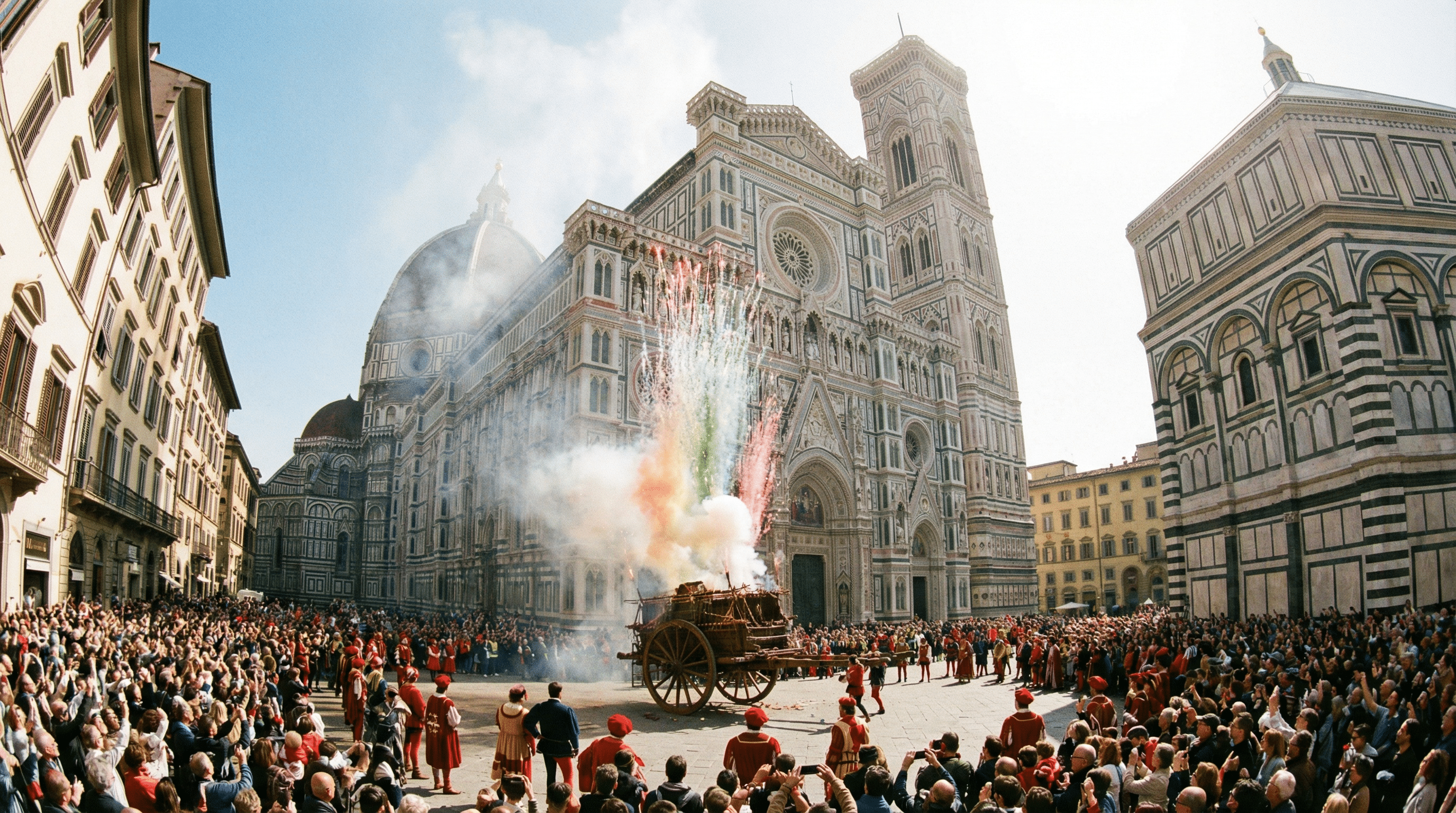
Imagine walking through Piazza della Signoria in Florence on a bright April afternoon. You might see a just-married couple taking photos, the bride glowing felice come una Pasqua (as happy as an Easter). Or think of the feeling in the city on Easter Sunday during the Scoppio del Carro (Explosion of the Cart) – the centuries-old Florentine tradition where a cart of fireworks lights up the square by the Duomo. The crowd’s faces after the spectacle are “allegri come una Pasqua,” filled with awe and glee at the celebration. The phrase captures that pure delight.
Example (Family):
Nonna has been told her grandchildren will visit for spring break, and she’s allegra come una Pasqua. She goes around telling all the neighbors in the market, practically dancing as she buys ingredients for a big welcome lunch. Her joy is contagious – clearly, she’s as happy as an Easter!
Using this idiom in your Italian speech will charm listeners, because it conveys a vivid image of unbridled happiness. It’s especially fitting to use in spring, but it works year-round whenever you want to express bubbly joy the Italian way.
Marzo tinge, aprile dipinge – “March Underpaints, April Paints”
Literally: “March dyes (or underpaints) and April paints.”
Meaning: March lays the base and April adds the color – together they bring the landscape to life.
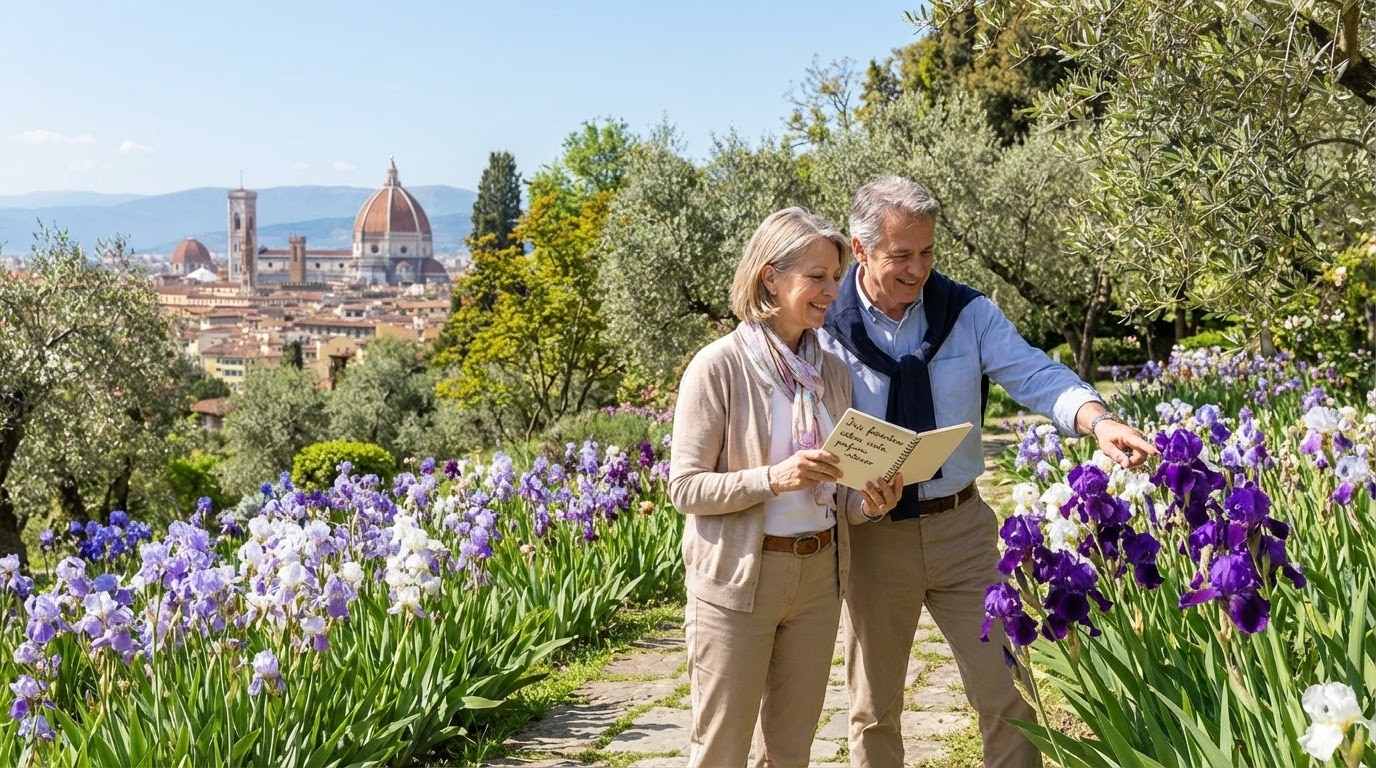
This lesser-known proverb offers a poetic take on spring’s progression. “Marzo tinge, aprile dipinge” evokes the image of an artist starting a painting. March starts to tinge (tint) the world with the first colors – think of early blossoms and green hints on trees. April then comes to paint in earnest, splashing vibrant colors across gardens and hillsides. In Tuscany, you can witness this art in action: in March, the fields have a faint green wash and maybe a few brave wildflowers. By April, Tuscany is in full bloom – bright red poppies in the fields, purple wisteria on villa walls, and pink peach blossoms in the orchards. Nature’s palette fills out beautifully.
Tuscans sometimes extend this saying: “Marzo tinge, aprile dipinge, maggio fa le belle donne,” adding “May makes women beautiful.” This humorous finish suggests that by May, with spring in full swing, everyone looks and feels their best (perhaps thanks to sunshine and fresh air!). While that part is tongue-in-cheek, the core phrase “Marzo tinge e aprile dipinge” truly reflects the seasonal transformation across Italy, especially in art-inspiring regions like Tuscany.
Example (Travel Journal):
A travel writer in Florence notes how dull winter vines in Chianti had tiny buds by late March, and come April they saw rolling vineyards turned vibrant green. They quote the saying in their blog: “Marzo tinge, aprile dipinge,” marveling at how each week the Tuscan countryside gained new hues as spring progressed.
For language learners, this idiom is a chance to wax poetic. Drop it into conversation when talking about spring landscapes or gardens – Italians will appreciate the imagery. It shows you don’t only know the practical proverbs, but also the romantic, artful side of Italian expression.
Embrace Spring Like a Local
As you have seen, the Italian language blossoms with creative sayings in springtime. From weather wisdom to expressions of joy, these idioms are used in everyday life – you might overhear them at a Florentine café or during a country hike with Tuscan friends. Try using one or two next time you chat in Italian; you’ll likely get an appreciative smile or nod. After all, speaking with idioms shows a connection to the culture that goes beyond textbook language.
On a sunny spring day, you could even challenge yourself to use all these sayings appropriately – perhaps while enjoying a gelato by the Arno or planning a Pasquetta picnic. And if you need a break, remember aprile dolce dormire – a little nap is oh-so-Italian. Learning idioms is one of the joys of mastering Italian, making your speech as colorful as the season itself.
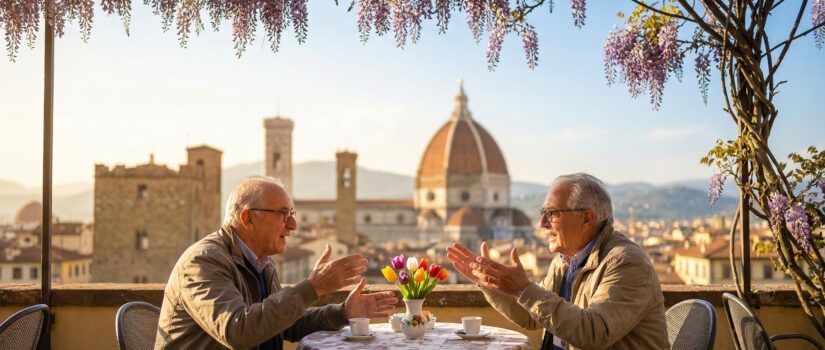
For further seasonal inspiration, you might enjoy reading about Italian autumn idioms we covered earlier, which celebrate fall’s pumpkins, rains and cozy vibes. And if you find yourself in Florence eager to practice what you’ve learned, why not do as locals do and study in one of the city’s beautiful cafes? Immerse yourself in the language amid the spring ambiance.
Lastly, if these cultural tidbits have sparked your curiosity, consider joining one of our immersive Italian culture courses – they’re a fantastic way to deepen your understanding of idioms, traditions, and everyday life in Italy. We offer various options, from language-focused classes to special cultural workshops, right here in Florence.
Buona primavera a tutti! Happy spring to everyone – and may your Italian vocabulary bloom like a Tuscan iris in May.