Learn Italian in Florence Through Gardens, Gelato, and Artisan Workshops
Spring in Florence is not only a season; it is a mood. The city brightens, the pace softens, and the spaces between masterpieces matter just as much as the masterpieces themselves. For international adults who want culture without rush, spring is the moment to learn Italian in the most elegant way: by using it gently, in the exact places where you are already paying attention. It suits travellers who value comfort and nuance.
This is not a call to “study harder”. It is an invitation to learn lightly—through gardens, gelato, cafés, and the craft botteghe of Oltrarno—so each word attaches to a scent, a texture, or a view. You will return home with a handful of phrases that feel earned, because you spoke them in the city that gave them meaning.
A Garden-Led Way to Learn: Boboli First, Then Your Own Rhythm
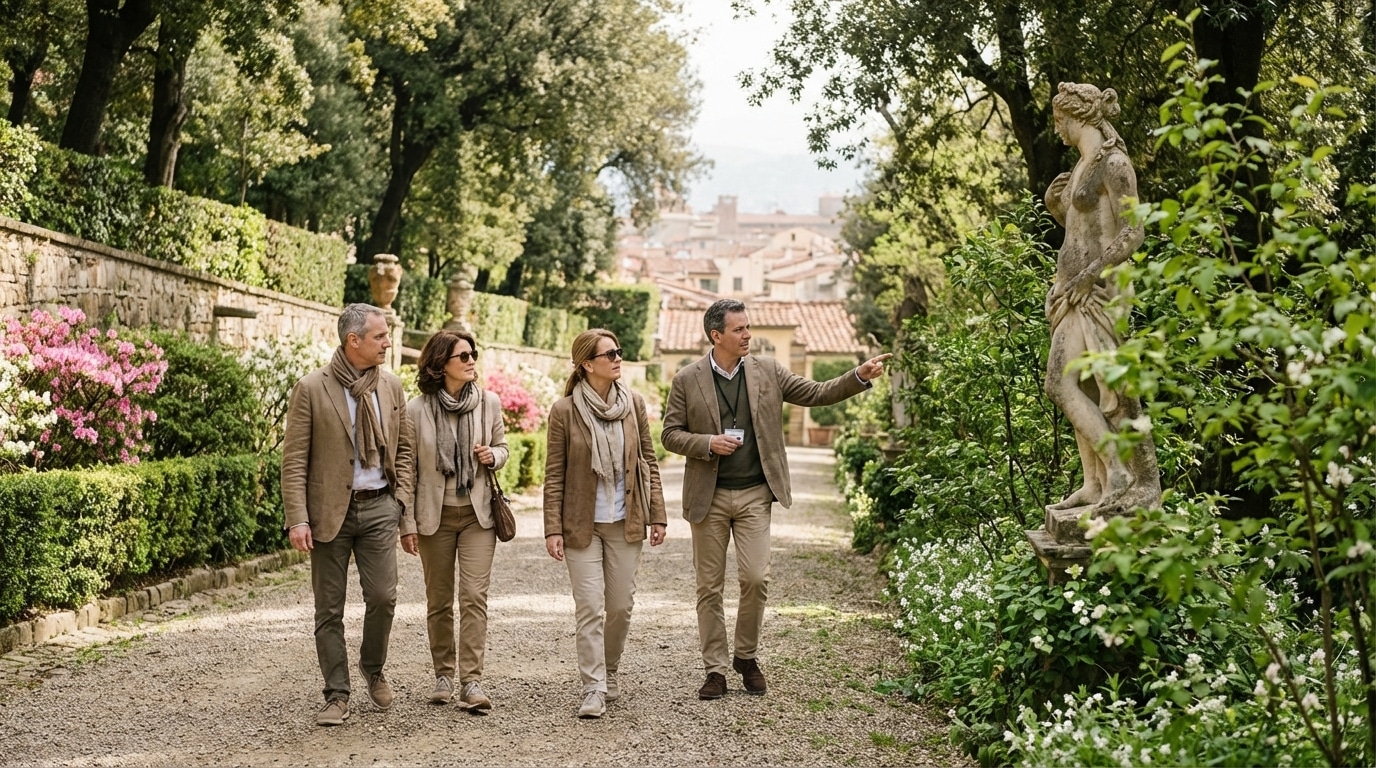
Begin with a place that teaches slowness: the Boboli Gardens behind Pitti Palace. In spring, the garden feels like an outdoor museum—terraces, statues, fountains, and long green corridors that frame Florence like a composed painting. Walk as you would in a gallery: pause, look, name what you see, then move on.
Italian practice here is wonderfully low-pressure because you can point. Try one simple structure and reuse it: “Che bella vista” (What a beautiful view), “Che silenzio” (What silence), “Che profumo” (What a scent). If you want to ask for direction without anxiety, keep one question ready: “Dov’è l’uscita?” (Where is the exit?) or “Dov’è il bagno?” (Where is the toilet?). The garden rewards repetition.
If the Iris Garden near Piazzale Michelangelo is open during your stay, treat it as a spring privilege rather than a checklist. It is typically available for a brief period in late spring, when the city’s emblematic flower is at its most spectacular. A visit there is less about ticking a site and more about learning to say what you feel: “È stupendo” (It’s wonderful) or “Mi piace molto” (I like it a lot).
Gelato as a Language Lesson: Small Choices, Real Conversations
Gelato is more than dessert; it is an everyday ritual that turns language into pleasure. A gelateria counter gives you clear options, simple questions, and instant feedback. Start with the easiest sentence you will ever use: “Vorrei un gelato, per favore” (I’d like a gelato, please).
Then add specificity, one step at a time. Ask to taste: “Posso assaggiare?” (May I try?). Choose your format: “in coppetta” (in a cup) or “nel cono” (in a cone). Name flavours slowly—pistacchio, nocciola, limone—and notice how the staff will often match your pace with a smile. If you forget a word, point and say, “Questo, per favore” (This one, please). It still counts.
For a more reflective gelato moment, take your cup to a quiet piazza and practise one sentence about taste: “È molto cremoso” (It’s very creamy) or “È fresco” (It’s refreshing). Learning works when you attach words to sensation.
To bring the same method indoors without turning art into homework, choose one label per room to read in Italian first. Look for words that repeat—sala (room), opera (work), ritratto (portrait), autore (author)—then say one sentence softly: “Mi colpisce la luce” (The light strikes me). These tiny rehearsals keep your Italian connected to looking.
Café Rituals That Build Confidence, One Espresso at a Time
Florence’s cafés are miniature theatres of Italian. The bar counter is fast, but the language is predictable, which makes it perfect practice. Begin with the greeting that sets the tone: “Buongiorno” (Good morning). Then order simply: “Un caffè, per favore” (An espresso, please) or “Un cappuccino” if it’s early enough for you to enjoy it as Italians do.
If you want to linger with a notebook and rehearse your phrases, choose a café that welcomes a slower rhythm and a longer stay. If you need inspiration, our guide to the best cafés in Florence for studying Italian will help you choose places where conversation feels natural. Once seated, practise the most useful request in travel Italian: “Mi porta dell’acqua, per favore?” (Could you bring me some water, please?).
When you’re ready to pay, keep it clean and polite: “Il conto, per favore” (The bill, please). Then end the exchange warmly: “Grazie mille, buona giornata” (Thank you very much, have a good day). These are small rituals, but they accumulate quickly.
Oltrarno Artisan Workshops: Learn Italian Through Making
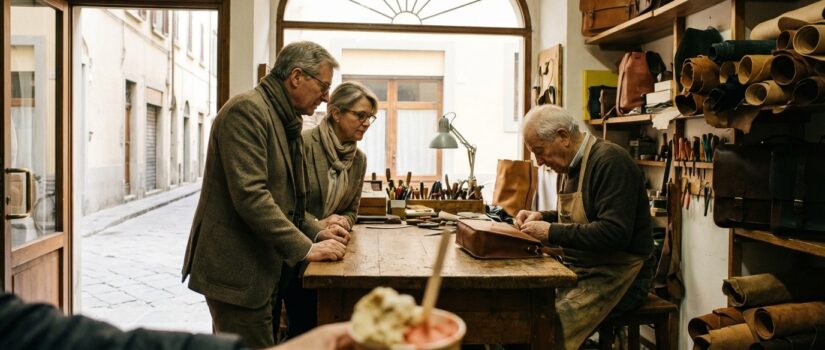
Across the Arno, Oltrarno is where Florence keeps its hands busy. Workshops on quieter streets still carry the tradition of the bottega: leather, paper, metal, wood, and small objects made with care. For a mature traveller, this is culture that doesn’t require stamina—only curiosity.
Language here is practical. Use questions that show respect for craft: “Come si fa?” (How is it made?), “Che materiale è?” (What material is it?), and “Da quanto tempo lo fa?” (How long have you done it?). If the artisan answers quickly, ask with a gentle smile, “Piano, per favore” (Slowly, please). You will often be met with patience.
If you purchase something, make the moment part of your learning. Ask “Quanto costa?” (How much is it?) and respond with “Perfetto” (Perfect) if it suits you. Then say the line that turns a transaction into a human exchange: “È bellissimo, complimenti” (It’s beautiful, congratulations). That kind of appreciation travels well.
Putting It Together: A Light, Structured Boost
Some travellers prefer a little structure so their Italian feels less improvised. A short lesson can do that, especially if you use the phrases the same day in cafés, gardens, and shops. If you wonder what progress is realistic, read How long does it take to learn and speak Italian? and choose a goal that feels encouraging rather than punishing.
If you want a more immersive option, you can also study Italian at school in Florence and combine morning classes with afternoon cultural time. The key is not to overfill your schedule; the city itself is the laboratory. A two-hour lesson followed by a Boboli walk can be more effective than a full day indoors.
A Final Note on Elegance: Speak Often, Speak Small
Learning Italian on holiday works best when it is discreet. Aim for short, repeatable exchanges rather than long speeches. Keep a “daily trio”: one greeting, one question, one compliment. In practice, that might be “Buongiorno”, “Dov’è…?”, and “Che bello”.
Most importantly, allow yourself to be a learner. If you make a mistake, smile and continue. Florence is a city of craft and patience; it rewards those who try.
Conclusion
In spring, Florence feels like it is inviting you to participate. Gardens teach you to slow down, gelato teaches you to choose, cafés teach you to speak efficiently, and artisan workshops teach you to ask good questions. When you weave Italian into these experiences, you don’t merely visit Florence—you meet it.
Pack a small phrase list, say “per favore” and “grazie” with confidence, and let each day add one new word you will actually use. If you do, your Italian will not live in a notebook; it will live in memories: sunlight on stone, the scent of a garden, and the taste of pistachio on your tongue.