Spring Food Traditions in Florence: Savoring Seasonal Flavors
Spring in Florence: A Season of Renewal and Flavor
Spring in Florence is a cultural and culinary rebirth. As the days grow longer and warmer, the city’s markets come alive with seasonal delights. Stalls overflow with verdant artichokes and crates of fava beans from the countryside, signaling winter’s end. Locals and visitors begin to fill outdoor tables at trattorias to enjoy the first tender vegetables and spring recipes. After the hearty fare of colder months, Florentine cuisine turns lighter and greener, infused with the fresh energy of the season.
Autumn had its chestnuts and porcini mushrooms (as seen in our Autumn Food Traditions in Florence: Celebrating Fall Flavors article), but spring paints an equally delicious scene. With Easter on the horizon, Florence’s focus shifts to new growth and festive traditions. Each season in Tuscany brings its own treasures, and spring invites everyone to savor its unique flavors.
Just as Florence celebrates seasonal change through food, the city also marks spring with historic events and public celebrations. Traditions such as the Scoppio del Carro and Easter rituals are deeply connected to the same idea of renewal and community explored in
Easter in Florence: From Scoppio del Carro to Spring Traditions
Seasonal Tuscan Ingredients in Spring
Tuscany’s spring kitchen revolves around what’s fresh and local. One emblematic ingredient is the artichoke (carciofo), which appears in Florentine markets by March. Locals enjoy these tender buds in simple ways – sautéed with olive oil and herbs, tossed raw in salads, or battered and fried into crispy carciofi fritti. During Easter, roasted spring lamb is often accompanied by young artichokes, a pairing that balances rich and delicate flavors.
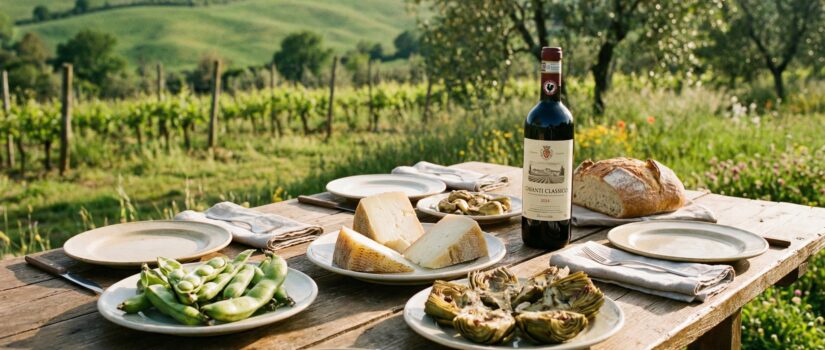
Another hero of the season is the fava bean, or baccello in Tuscan dialect. By April, market stalls overflow with green fava pods. The classic spring snack is to shell raw fava beans and eat them with bites of young Pecorino Toscano cheese – a simple pairing called cacio e baccelli that perfectly captures the season’s bounty. Spring is lambing time for sheep, so fresh pecorino (often called marzolino, “March cheese”) is abundant; its mild, milky flavor is an ideal match for the crunchy sweetness of favas. Tuscans savor this duo at picnics or as an antipasto with a glass of local wine, tasting pure Tuscan spring in each bite.
Easter in Tuscany: Sweet Breads and Lamb Feasts
Spring’s culinary peak in Florence comes at Easter (Pasqua), when families gather for festive meals steeped in tradition. On the sweet side, a standout is schiacciata di Pasqua, a Tuscan Easter bread. Despite the name “schiacciata” (meaning “pressed flat”), this is actually a tall, fluffy loaf – its moniker comes from the many eggs smashed into the dough during preparation. Fragrant with anise seeds and citrus, and often spiked with a splash of Vin Santo, schiacciata di Pasqua is baked in the days before Easter and enjoyed for breakfast or dessert. Alongside it sits the beloved colomba pasquale, the dove-shaped cake adorned with almond glaze and sugar. The colomba is a nationwide Easter symbol and Florentine families happily include it on their table, exchanging these cakes as gifts much like panettone at Christmas. Slicing into a fragrant schiacciata or colomba to share with loved ones marks the sweet beginning of spring’s biggest holiday.
For the main course of Easter Sunday, lamb is nearly obligatory in Tuscany. A roast young lamb (agnello al forno) seasoned with rosemary, garlic, and olive oil is the classic centerpiece, typically accompanied by golden roasted potatoes and sautéed artichokes. Some families opt for lamb stewed in tomato or grilled lamb chops, but the theme is the same – tender spring lamb symbolizing renewal and celebration. Seasonal sides like fresh peas or baby artichokes often round out the menu, and everything is enjoyed with a robust Chianti Classico wine. Hard-boiled eggs (traditionally blessed at church) also make an appearance on the Easter table, reinforcing the theme of rebirth. The feast ends on a sweet note with slices of schiacciata di Pasqua and colomba for dessert, a sip of Vin Santo or strong espresso, and the contentment of tradition shared.
Pasquetta: Picnics in the Tuscan Countryside
The Monday after Easter, known as La Pasquetta (Little Easter), is devoted to leisure and the outdoors. Italians have a saying: Natale con i tuoi, Pasqua con chi vuoi – “Christmas with your family, Easter with whoever you want.” Unlike the more formal, family-oriented Easter Sunday, Pasquetta is often spent freely with friends, enjoying spring in a carefree way. In Florence and all over Tuscany, this means picnics and day trips into the countryside. Parks, hilltops, and vineyards become gathering spots for festive groups reclining on blankets and unfolding chairs under the mild April sky.
A Pasquetta picnic basket captures all the simplicity and goodness of Tuscan spring fare. There will almost certainly be a loaf of crusty pane toscano (Tuscan bread) and a bottle of local wine. Leftovers from Easter make an appearance: slices of cold roast lamb or perhaps some savory pie from the day before. But the stars of the picnic are often the fresh snacks: hard-boiled eggs, perhaps painted by the kids the day before; hunks of pecorino cheese and bunches of fava beans ready to be shelled and eaten on the spot; cured olives, salami, and maybe a jar of artichokes preserved in oil. For dessert, there might be pieces of colomba cake or schiacciata di Pasqua packed up to go, to be enjoyed with a view of rolling Tuscan hills. The atmosphere is joyful and relaxed – children play soccer or fly kites, while adults linger over food and laughter. This communal outing embodies the Tuscan love of good food and good company, set against the backdrop of nature in bloom.
Spring Food Festivals and Markets
Tuscany’s love of food extends into springtime festivals (sagre) that celebrate seasonal specialties. In late March, Volterra hosts a fair for the prized tartufo marzuolo (March truffle). In April, the village of Chiusure in the Crete Senesi holds an Artichoke Festival, where visitors feast on artichoke-based dishes amid its medieval streets. As May arrives, fruity celebrations take over – towns like Terricciola and Lari host strawberry and cherry festivals, offering everything from fresh fruit tastings to homemade jams. Each of these sagre is a chance to taste local treats and experience the joyful community spirit of Tuscany’s small towns.
In Florence, spring brings special food markets and fairs as well. Easter weekend often sees open-air markets in historic piazzas, selling regional sweets, chocolates, and artisanal products. Weekly farmers’ markets brim with the season’s bounty – bundles of asparagus and peas, baskets of fava beans, rounds of young pecorino, and bottles of new olive oil. Even the everyday markets like Sant’Ambrogio are at their most colorful, with stalls piled high with spring greens and delicate produce. Whether you venture to a country sagra or browse a city market, the message is the same: spring is a time to come together over good food and celebrate nature’s renewal.
Food festivals are often part of a broader cultural calendar that animates Florence throughout the season. Many of these events take place alongside concerts, open-air performances and historical reenactments described in Spring Festivals in Florence: Music, Culture and Traditions in Bloom, creating a rich and immersive experience for visitors.
And for those eager to delve deeper into Italian life, consider joining an Italian culture course during your visit. Learning the language and culinary customs of Italy can turn a simple meal into an enriching adventure, making every bite of Florence feel even more authentic.