learn Italian FlorenceTag

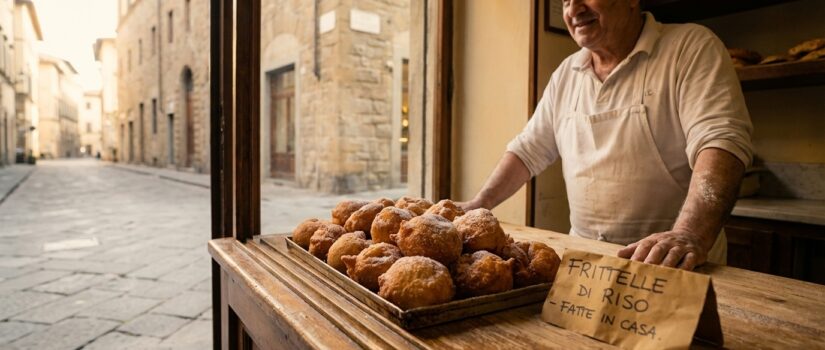
Fresh frittelle di riso on a wooden tray in a Florence pasticceria with a handwritten Italian sign, representing spring language practice in Florence

Florence in March does not look the same as Florence in August. The tourist pressure has not arrived yet, the light is cooler and cleaner, and the city follows its own quiet seasonal rhythms: pastry shops fill their windows with frittelle di riso for the Festa del Babbo on 19 March, the Tuesday market at Cascine wakes up along the Arno, and neighbourhood fornai return to their early-morning rhythms after winter. This article shows language learners how to use these specific, repeatable March moments — not as cultural sightseeing but as structured Italian practice. Each ritual becomes a conversational anchor: a phrase at the pasticceria counter, a question at a market stall, a sign read slowly on a festival board. The result is Italian acquired through the city’s own calendar, one micro-moment at a time.
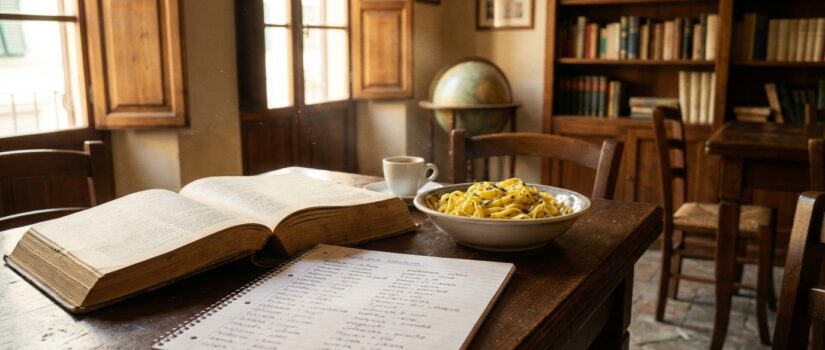

Open Italian dictionary and vocabulary notebook on a wooden table in a Florentine café, representing surprising facts about the Italian language

Italian surprises even its most dedicated students. Words that learners eat for breakfast — gnocchi, spaghetti, ravioli — are already in their plural form, a fact most people study for years without noticing. Seven per cent of all German vocabulary traces back to Italian, classical music communicates exclusively through Italian across the entire world, and the Italian alphabet officially contains only 21 letters. This article unpacks seven well-documented but rarely taught facts about the Italian language, covering grammar, phonetics, vocabulary, and cultural history. Each one deepens the reader’s sense of why Italian is worth learning and why Florence, where the language was born, remains its natural home.