Accademia della CruscaTag

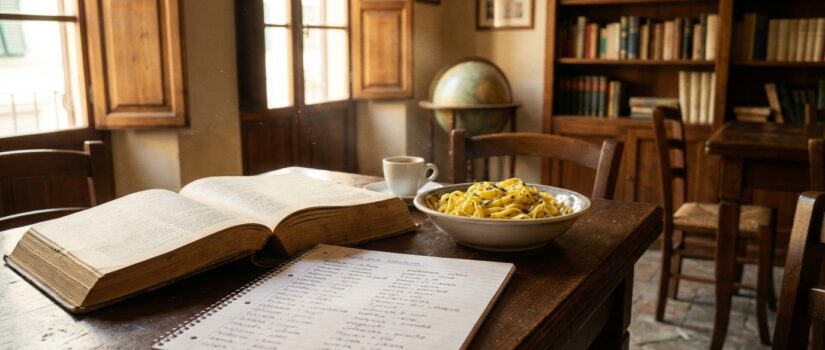
Open Italian dictionary and vocabulary notebook on a wooden table in a Florentine café, representing surprising facts about the Italian language

Italian surprises even its most dedicated students. Words that learners eat for breakfast — gnocchi, spaghetti, ravioli — are already in their plural form, a fact most people study for years without noticing. Seven per cent of all German vocabulary traces back to Italian, classical music communicates exclusively through Italian across the entire world, and the Italian alphabet officially contains only 21 letters. This article unpacks seven well-documented but rarely taught facts about the Italian language, covering grammar, phonetics, vocabulary, and cultural history. Each one deepens the reader’s sense of why Italian is worth learning and why Florence, where the language was born, remains its natural home.
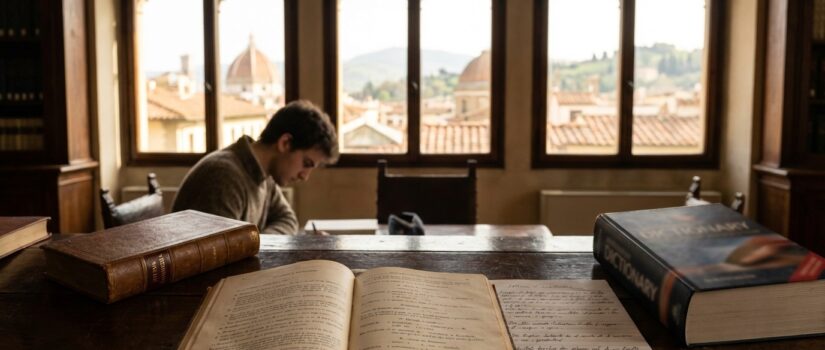

Student studying Italian in a historic Florentine study room with Dante's Divina Commedia and a grammar textbook on the desk

Most students who enrol in an Italian language course never stop to ask a simple question: why does the Italian they are learning sound so much like what people speak in Florence? The answer reaches back to the fourteenth century, to a small group of writers who chose to set aside Latin and write in the dialect of their city. This article traces the journey from medieval Florentine vernacular to modern standard Italian, explaining the literary, economic, and institutional forces that made Tuscany the cradle of the language. It is both a historical narrative and a practical insight for anyone who wants to understand why studying Italian in Florence still feels, today, like going straight to the source.