The Maggio Musicale Fiorentino: How Music Unlocks Italian for Language Learners
Imagine an institution so embedded in Italian cultural identity that the entire world borrows its vocabulary. When a conductor calls for a repeat passage, they say da capo — from the head, in Italian. When a score calls for softness, the marking is piano. When the choir swells, it reaches forte. Every musical score produced in the last four centuries, regardless of the composer’s nationality, relies on Italian as its operational language.
The Maggio Musicale Fiorentino, founded in Florence in 1933, sits at the origin of this tradition. For students learning Italian in Florence during spring, it is one of the most linguistically rich experiences the city offers.
What the Maggio Musicale Fiorentino Is — and Why It Matters
The festival — whose name translates simply as Florentine Musical May — takes place primarily at the Teatro del Maggio, a modern concert hall on the western edge of the city centre. The programme runs from April through June and includes opera productions, ballet, chamber music, and large-scale orchestral concerts. It is the oldest contemporary music festival in Italy.
The 2025 programme includes highlights directly relevant to language learners: performances of Roberto Bolle and Friends in a ballet programme dedicated to Caravaggio (9–11 May), and a range of opera and choral evenings through late April and June. Tickets are available at the Teatro del Maggio box office and online.
The significance for Italian learners is not only the music itself but the entire ecosystem around it: programme notes in Italian, announcements in Italian, conversations in the foyer, pre-performance talks, and the specific social register of a Florentine cultural audience.
Opera Italian: The Vocabulary That Built the Language
Opera was invented in Florence in the late 16th century by a group of humanists called the Camerata de’ Bardi, who were attempting to revive ancient Greek dramatic music. The genre spread from Florence across Europe, carrying Italian terminology with it. Understanding this vocabulary — even partially — opens a direct window into the formal register of the Italian language.
A short working vocabulary for the Maggio: il libretto (the text of the opera), il soprano / il tenore / il baritono (voice types), l’aria (a solo song within the opera — also the everyday word for air), il coro (the chorus), il direttore d’orchestra (conductor). These words move between musical and everyday Italian fluidly.
This kind of vocabulary — where specialised register overlaps with common speech — is the subject of broader analysis in the article on surprising facts about Italian that even advanced learners don’t know. The opera connection is one of the most striking examples of Italian’s global reach into other domains.
How to Use the Maggio as an Active Language Exercise
Going to the opera or a concert at the Maggio Musicale does not automatically produce language learning. Like any cultural experience, it requires a small amount of structured engagement to become genuinely instructive.
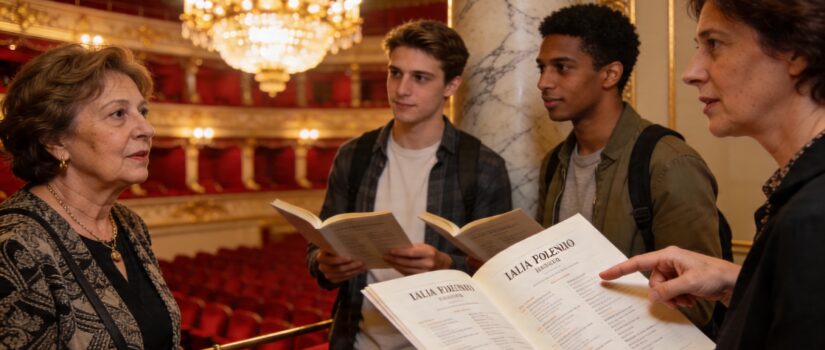
Before the event: Download the programme in Italian from the Teatro del Maggio website. Read the opera synopsis or ballet summary in Italian. Identify five words you do not know and look them up in context before arriving.
During the event: Follow the surtitles (sopratitoli) if available. Many productions at the Maggio include Italian-language supertitles — particularly useful for hearing the connection between written and sung text.
After the event: Find a café near the theatre and describe the performance in Italian to a companion, a teacher, or in a written journal entry. Use the five vocabulary items you prepared. This deliberate retrieval step consolidates what you encountered during the evening.
The Maggio and the Broader April–June Cultural Calendar
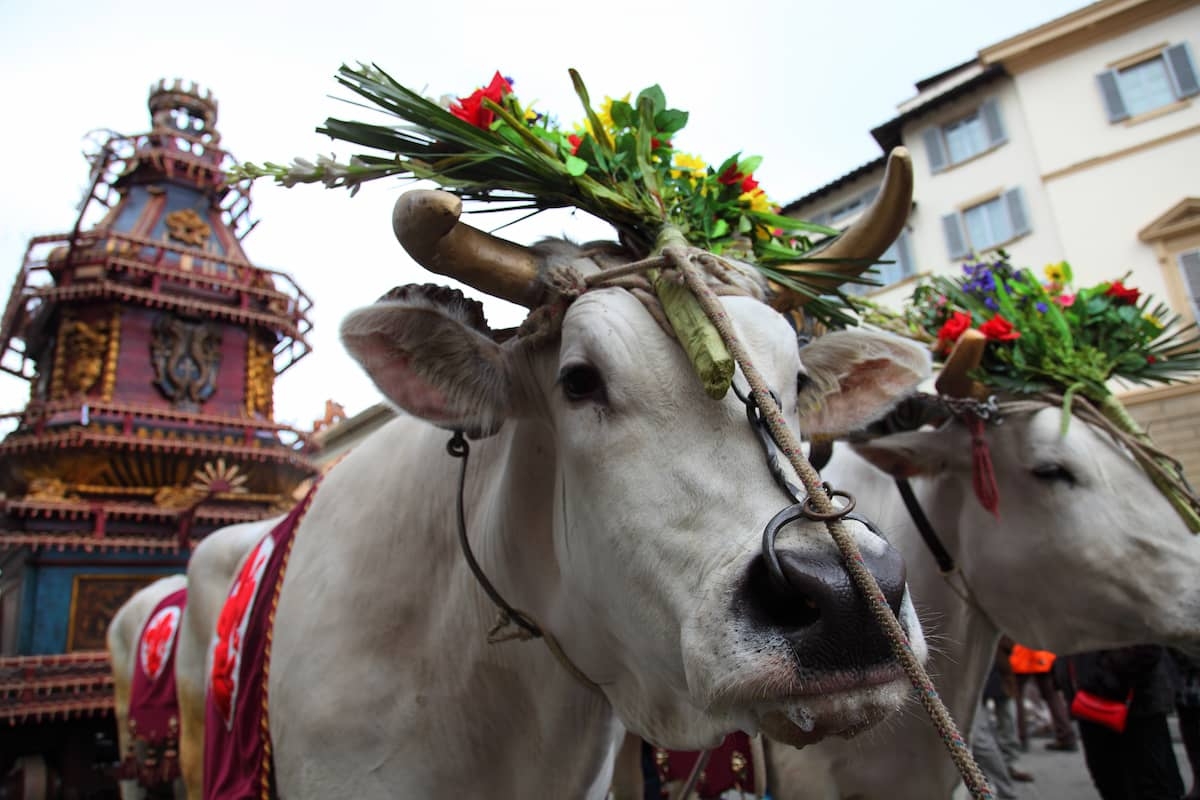
The Maggio Musicale Fiorentino does not stand alone in Florence’s spring calendar. The city between April and June is dense with cultural events that each carry their own Italian vocabulary: the Scoppio del Carro at Easter, the neighbourhood markets of May, the openings of the spring exhibition season. The article on Florence gardens and spring cultural immersion maps several of these experiences and shows how to build them into a structured language practice routine.
For a student enrolled in an Italian language course in Florence during spring, the Maggio represents the formal cultural register of the language — elevated, precise, historically layered. Combine it with the informal Italian of markets and bars, and you are covering the full range of the language in a single week.
The Italian culture courses at Istituto Il David are designed to do exactly this: pair formal language instruction with structured engagement with Florence’s cultural calendar, including the performing arts season.
Ready to enrol?
The Maggio Musicale Fiorentino runs from April through June — which is also when Istituto Il David’s spring and summer programmes are in full session. Our culture courses and intensive programmes will get you there. Florence’s cultural calendar is part of your curriculum.