Beyond the Tourist Trail: Fiesole, Settignano, and the Hill Villages Around Florence
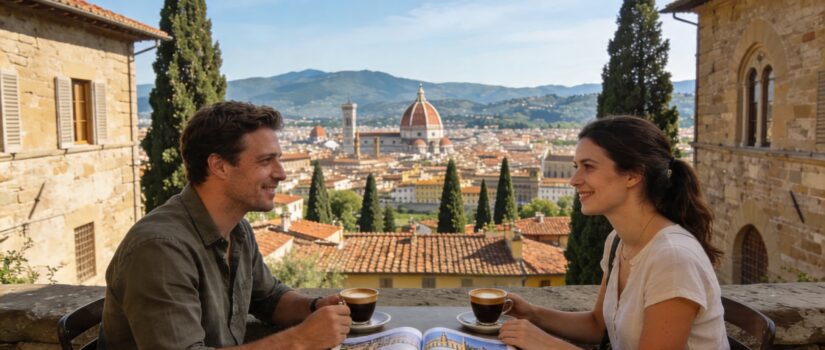
There is a bus line from the centre of Florence — number 7, departing from Piazza San Marco — that climbs steadily through increasingly narrow streets for about 25 minutes before arriving at a small square with a Roman theatre, a cathedral that predates Florence’s own, and a view across the Arno valley that explains why every Renaissance painter who could afford it chose to live on this hill rather than below.
Fiesole is the most famous of the villages that surround Florence. The hills on every side hold a ring of smaller settlements, each connected to the centre by ordinary urban buses, each offering a version of Italian life that the tourist infrastructure of the centro storico has largely overwritten. For language learners, these villages are underused resources.
Fiesole: The City That Predates Florence
Fiesole was a significant Etruscan and Roman settlement centuries before Florence existed. Its archaeological zone — Teatro Romano, terme, and a small museum — sits in a natural bowl just below the main square and is open year-round. The view from Piazza Mino da Fiesole over Florence and the valley is one of the most frequently painted panoramas in Italian art history.
Vocabulary anchored to Fiesole: il panorama (the view — used constantly in Italian for any scenic vista), le rovine romane (the Roman ruins), il belvedere (a vantage point — literally "beautiful view"), in collina (in the hills — the spatial phrase Florentines use when referring to any of the surrounding villages). Sono andato in collina is a sentence that marks you immediately as someone who knows how the city works.
Between June and August, Fiesole hosts the Estate Fiesolana festival — one of the oldest performing arts festivals in Italy, held in the Roman theatre itself. Concerts, theatre, and cinema screenings take place in the open air against the backdrop of 2,000-year-old stone seating.
Settignano: The Village of Sculptors
Settignano sits on a ridge east of Florence, reachable on bus 10 from Piazza San Marco in about 30 minutes. It is less visited than Fiesole but arguably more beautiful: a compact village of stone houses, a small church square, and terraced gardens descending toward the valley. Michelangelo spent part of his childhood here, as did the sculptor Desiderio da Settignano.
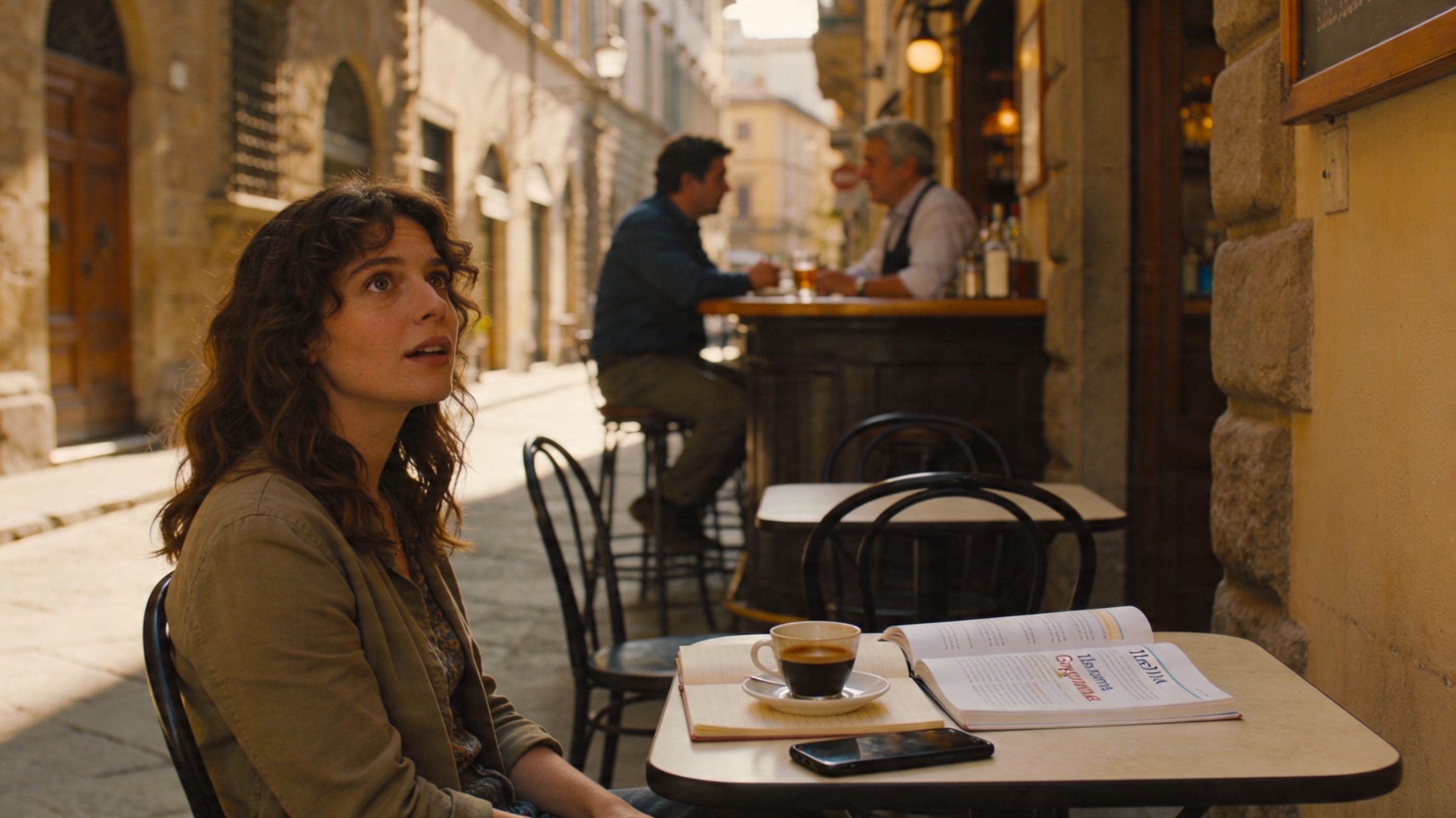
The bar in the main square — Piazza Tommaseo — is where the village actually functions. The vocabulary here is domestic and specific: il borgo (the village or historic core of a settlement — distinct from il paese, which implies a more rural context), i vicoli (the narrow lanes), la piazzetta (the small square — the diminutive signals both size and affection).
Settignano’s hillside position also makes it one of the best spots to practise the Italian of direction and orientation — the same vocabulary covered in the context of using Florence’s seasonal rhythms as structured Italian practice. Asking locals how to reach a viewpoint generates exactly the kind of spontaneous directional exchange that builds practical fluency.
Arcetri and San Miniato al Monte: The Southern Hills
South of the Arno, the road up to Arcetri — reached by bus 38 from Porta Romana — passes the Villa il Gioiello, where Galileo spent the last years of his life under house arrest, and the Osservatorio Astrofisico, still a functioning research institution.
Below Arcetri, San Miniato al Monte — an 11th-century Romanesque church with a geometric marble facade — is one of the most beautiful buildings in Florence and visited by a fraction of the people who queue for the Uffizi. The Romanesque architectural vocabulary is worth carrying on any visit: la facciata (the facade), il campanile (the bell tower), la navata (the nave), l’abside (the apse). These terms work in every church in Italy.
How to Plan a Hill Village Morning
The most practical approach is a half-day excursion: bus ride, walk, coffee at the local bar, market or archaeological visit. Leave Florence by 9 a.m. to arrive before the heat of the day. Return by early afternoon, leaving the rest of the day for class or city practice.
Before leaving, prepare three conversation openers in Italian: one for the bar, one for asking directions, one if a local asks where you are from. Sto studiando l’italiano qui a Firenze (I am studying Italian here in Florence) invariably produces a positive reaction — Florentines are genuinely pleased when visitors engage with the language.
Istituto Il David organises excursions to Fiesole and the surrounding area as part of the student activities programme. These are teacher-led visits that combine cultural context with Italian practice in the field — exactly the kind of structured immersion that makes the hill villages more than a scenic detour.
Ready to enrol?
Florence’s hills are part of the city’s curriculum. Fiesole’s Roman theatre, Settignano’s stone lanes, and the panoramic terraces above the Arno are not extras — they are the Italian language in its natural setting. Our Italian summer courses include teacher-led excursions to these villages as part of the programme.