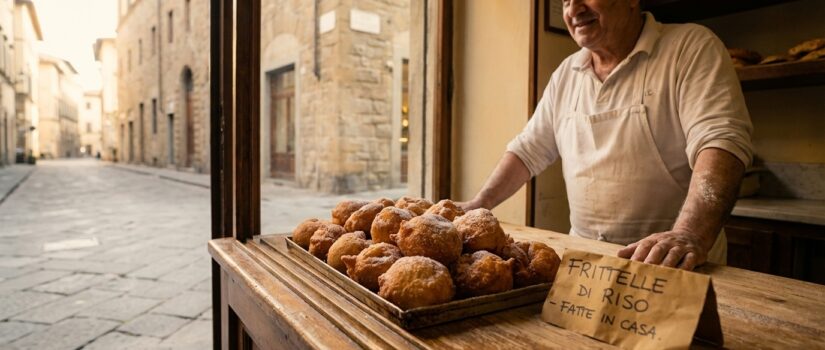
Fresh frittelle di riso on a wooden tray in a Florence pasticceria with a handwritten Italian sign, representing spring language practice in Florence

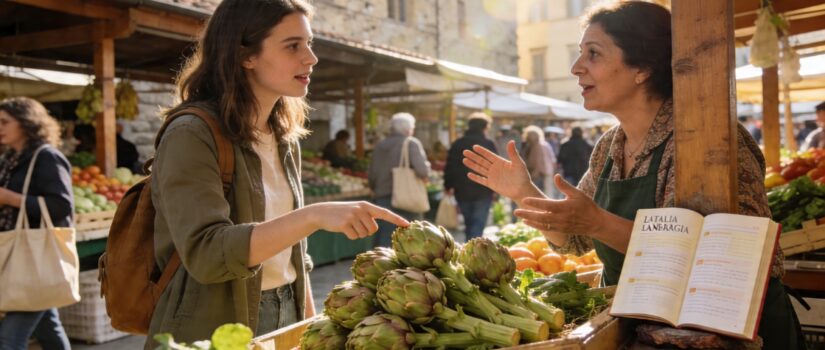
Florence in March does not look the same as Florence in August. The tourist pressure has not arrived yet, the light is cooler and cleaner, and the city follows its own quiet seasonal rhythms: pastry shops fill their windows with frittelle di riso for the Festa del Babbo on 19 March, the Tuesday market at Cascine wakes up along the Arno, and neighbourhood fornai return to their early-morning rhythms after winter. This article shows language learners how to use these specific, repeatable March moments — not as cultural sightseeing but as structured Italian practice. Each ritual becomes a conversational anchor: a phrase at the pasticceria counter, a question at a market stall, a sign read slowly on a festival board. The result is Italian acquired through the city’s own calendar, one micro-moment at a time.

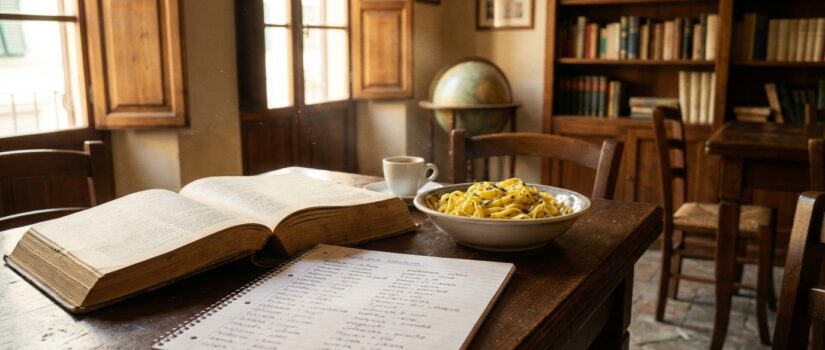
Open Italian dictionary and vocabulary notebook on a wooden table in a Florentine café, representing surprising facts about the Italian language

Italian surprises even its most dedicated students. Words that learners eat for breakfast — gnocchi, spaghetti, ravioli — are already in their plural form, a fact most people study for years without noticing. Seven per cent of all German vocabulary traces back to Italian, classical music communicates exclusively through Italian across the entire world, and the Italian alphabet officially contains only 21 letters. This article unpacks seven well-documented but rarely taught facts about the Italian language, covering grammar, phonetics, vocabulary, and cultural history. Each one deepens the reader’s sense of why Italian is worth learning and why Florence, where the language was born, remains its natural home.

Student studying Italian in a historic Florentine study room with Dante's Divina Commedia and a grammar textbook on the desk

Most students who enrol in an Italian language course never stop to ask a simple question: why does the Italian they are learning sound so much like what people speak in Florence? The answer reaches back to the fourteenth century, to a small group of writers who chose to set aside Latin and write in the dialect of their city. This article traces the journey from medieval Florentine vernacular to modern standard Italian, explaining the literary, economic, and institutional forces that made Tuscany the cradle of the language. It is both a historical narrative and a practical insight for anyone who wants to understand why studying Italian in Florence still feels, today, like going straight to the source.

Visitors with a notebook practice Italian in Florence’s Iris Garden amid spring blooms

Florence in spring transforms into a giardino in fiore, a garden in bloom. This guide explores the most stunning and accessible gardens opening their gates with the season’s first blossoms. From the regal avenues of Boboli Gardens to the hidden giardini segreti of Bardini, and the fleeting blooms of the Iris Garden and Rose Garden, each offers a unique cultural experience. Visitors will discover not only vibrant flowers and panoramic views of Florence, but also chances to immerse in la lingua italiana – the Italian language – through every stroll, sign, and conversation. Enjoy a spring journey where nature and language learning blossom together under the Tuscan sun.

Mature travellers observing a leather artisan at work in Florence with gelato in hand

Spring in Florence invites a slower, more elegant kind of language learning.
Instead of “studying harder”, you practise Italian lightly in gardens, cafés, gelaterie, and artisan botteghe.
Each phrase is tied to something you can see, smell, taste, or touch—so it stays with you.
This article shows how to build confidence through small, repeatable exchanges, not long speeches.
The result is practical Italian you actually use, in the moments that make Florence memorable.

Visitors strolling through Boboli Gardens in spring, Florence, with statues and fresh greenery

A spring visit to Florence can be both an art pilgrimage and a light language immersion: guided cultural touring, paced garden time, and small, repeatable Italian exchanges that deepen engagement without turning the trip into coursework.

Research grounding: Factual points and institutional references were checked against primary sources from the City of Florence’s official tourism portal (FeelFlorence), the Uffizi Galleries’ official site for Boboli Gardens and the Pitti complex, the Maggio Musicale Fiorentino’s official communications about the Festival and season, the Società Italiana dell’Iris for the Iris Garden’s limited spring opening window, the University of Florence for Italian-language course provision via its Language Centre (CLA), and FeelFlorence’s overview of Florentine craftsmanship and workshops in Oltrarno.

Panoramic spring view of Florence from Piazzale Michelangelo with the Duomo and blooming trees at sunset

Florence in spring awakens with vibrant cultural traditions, from the ancient Scoppio del Carro Easter spectacle to the renowned Maggio Musicale opera festival. Blooming gardens and mild weather set the scene for elegant museum tours, church visits, and walks through Renaissance piazzas. This article weaves together Florence’s springtime highlights—festivals, tours, artisan experiences and countryside delights—with practical tips on soaking in the language. It presents evocative details and sample Italian phrases to enrich the journey, and a suggested three-day itinerary combining sightseeing with light language practice. The goal is an inspiring, informative guide for sophisticated travelers aged 35–65 seeking culture and immersion in Florence’s spring.

Rustic Tuscan spring picnic with pecorino cheese, fresh fava beans, artichokes, bread and a bottle of Chianti set on a wooden table in the countryside.

Springtime in Florence is a feast for the senses. As winter fades, Tuscan markets come alive with tender artichokes, fresh fava beans, and young pecorino cheese. Locals prepare traditional Easter breads and sweets, and savory lamb dishes take center stage at family gatherings. From lively Pasquetta picnics in the countryside to bustling food festivals celebrating seasonal bounty, spring in Florence offers a delicious journey through Tuscany’s culinary heritage.

Spring festival in Florence with musicians and flag throwers performing in Piazza Santa Croce, surrounded by flower stalls and a large crowd in front of the Basilica of Santa Croce.

Spring in Florence is a season of vibrant festivals and time-honored traditions that bring the city’s music, art and cultural heritage into full bloom. In 2026, as winter fades, Florence’s calendar comes alive with events ranging from spectacular religious rituals to all-night art celebrations and floral displays. This article explores the major spring festivals in Florence for 2026 – including exact dates and what to expect – so visitors can experience the city’s lively springtime atmosphere at its best.

Fireworks during the Scoppio del Carro Easter tradition in Florence, with the Cathedral of Santa Maria del Fiore and the Baptistery in Piazza del Duomo.

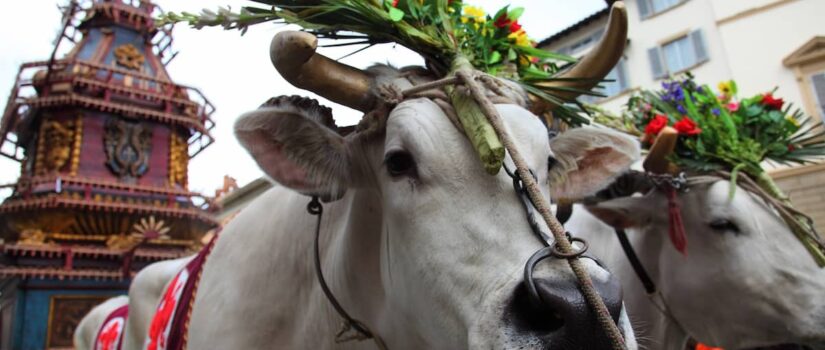
Easter in Florence is an immersive blend of sacred ritual, local folklore, and springtime joy. From the pageantry of Holy Week through the spectacular Scoppio del Carro on Easter Sunday, the city comes alive with traditions nearly a thousand years old. International visitors and Florentines alike mingle in piazzas for blessings and fireworks, then gather around family tables to enjoy seasonal breads and classic dishes. This article explores what to expect during Easter 2026 in Florence – the dates and customs of Holy Week, the Pasquetta Monday outings, and the cherished Florentine culinary rituals that make Easter here a feast for all the senses.